No sector on earth is hiring for AI faster than technology, media, and telecom. According to PwC’s 2026 Global AI Jobs Barometer, this sector now leads every other industry in AI-driven job growth, with nearly one in eight new roles tied directly to AI. Read that twice. While other fields are still debating whether AI will matter, the media and content world sits right at the centre of that shift – and it has rewritten the job description for nearly every role in the industry.
For a media student, that single number changes everything about what “being employable” means. Knowing how to shoot, edit, and write a script is no longer the finish line; it’s the starting point. What today’s media aspirants need is a curriculum that blends timeless storytelling craft with AI literacy, data fluency, and real industry exposure. That is precisely the philosophy behind Media Education 4.0, the forward-looking academic framework introduced by Deviprasad Goenka Management College of Media Studies (DGMC) to power its redesigned postgraduate programs.
What Exactly Is Media Education 4.0?
Media Education 4.0 is best understood as a response to an industry that has fundamentally shifted shape. Just as Industry 4.0 brought automation and intelligent systems into manufacturing, Media Education 4.0 brings AI-driven thinking, digital-first production, and cross-disciplinary skill-building into journalism, film, advertising, and mass communication training.
Rather than treating technology as an add-on elective, this approach weaves AI tools, data journalism, automation-aware production workflows, and digital storytelling into the core of every course. The goal is simple: graduates should walk out not just knowing how to create content, but knowing how to create content intelligently, efficiently, and competitively in a landscape where AI is now a daily collaborator rather than a futuristic concept.

Why the Old Media Education Model Falls Short
For decades, media education in India followed a fairly predictable pattern – heavy emphasis on theory, some hands-on production work, and a final-year internship to bridge the gap between classroom and career. That model worked well when the media industry itself moved slowly. It does not work anymore.
Today’s newsrooms use AI for transcription and headline testing. Advertising agencies use generative tools for storyboarding and copy variants. OTT platforms use audience data to shape entire content slates. A media graduate who has never touched these tools is, frankly, starting their career a step behind. This is the precise problem Media Education 4.0 is designed to solve – not by abandoning craft and creativity, but by pairing it tightly with the technical fluency the modern content economy demands.
How DGMC Is Bringing Media Education 4.0 to Life
DGMC has rolled out Media Education 4.0 as the philosophy powering its newly redesigned 18-month full-time postgraduate programs, signalling a deliberate, structural shift rather than a cosmetic rebrand. Here is how that translates into the actual student experience.
1. AI-Integrated, Industry-Aligned Curriculum
Instead of bolting on a single “AI module,” DGMC has rethought how core media subjects are taught, so that data literacy, automation tools, and AI-assisted workflows sit naturally alongside scriptwriting, editing, and production. Students exploring the college’s postgraduate programs engage with content strategy and creation through a lens that mirrors how real studios and agencies actually operate today.
2. Specialised, Future-Facing Programs
DGMC’s postgraduate offerings are built around where the industry is actually hiring, not where it used to hire ten years ago. Programs such as the Masters of Arts (Mass Communication – Film, Television & New Media), theMasters of Arts (Public Relations), and theMasters of Arts (Communication & Journalism) give students the option to specialise while still being grounded in the same AI-aware, digitally fluent foundation that Media Education 4.0 promotes.
For students starting earlier in their academic journey, DGMC’s undergraduate routes – including theBachelors of Arts (Multimedia & Mass Communication), theBachelors of Arts (Film, Television & New Media Production), and theBachelors of Science (Animation & VFX) – build the same forward-looking skill set from the ground up, so the transition into postgraduate specialisation feels natural rather than disjointed.
3. Real Studios, Not Just Classrooms
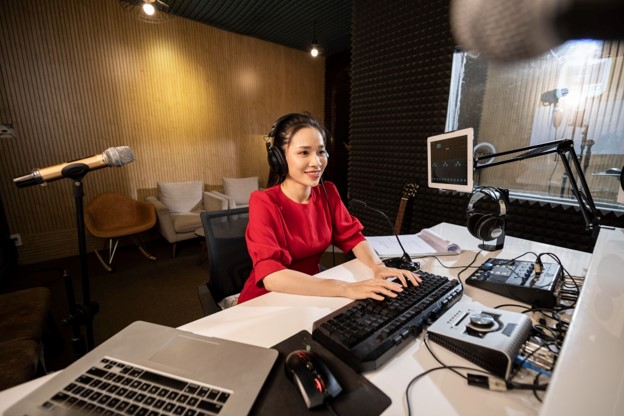
Conceptual learning about AI tools means little without the infrastructure to actually use them. DGMC’s campus includes an advanced Sound Lab, a dedicated shooting floor, and a modern Mac Lab, giving students hands-on access to professional-grade production environments rather than theoretical walkthroughs alone. Learning to edit, mix, and produce in a space built to industry standards changes how quickly a student becomes employable.
4. Industry Partnerships That Mean Real Exposure
A curriculum is only as strong as its connection to the working world, and DGMC’s network of knowledge partners – spanning production houses, digital agencies, and entertainment brands – gives students live project exposure rather than purely hypothetical case studies. This is reinforced through DGMC’s dedicated Training & Placement Cell, which works to ensure graduates leave with both a portfolio and the practical readiness employers are now actively screening for.
The Skills Today's Content Creators Actually Need
A curriculum is only as strong as its connection to the working world, and DGMC’s network of knowledge partners – spanning production houses, digital agencies, and entertainment brands – gives students live project exposure rather than purely hypothetical case studies. This is reinforced through DGMC’s dedicated Training & Placement Cell, which works to ensure graduates leave with both a portfolio and the practical readiness employers are now actively screening for.
Why This Matters for Students Choosing a Media Institute Today
Choosing where to study media and mass communication is no longer just about brand reputation or campus facilities, though those still matter. It is increasingly about whether an institute’s curriculum reflects the industry students will actually graduate into. A college teaching only pre-AI production workflows is preparing students for a version of the media industry that, frankly, no longer exists in the same form.
DGMC’s Media Education 4.0 framework is a direct, structural answer to this concern – not a marketing label, but a genuine recalibration of how postgraduate media programs are taught, supported by real labs, real industry partners, and a placement cell focused on outcomes rather than promises.

Final Thoughts
The future of content is being shaped by AI, data, and platforms that evolve every few months – and the media professionals who will lead that future are the ones trained to adapt rather than simply imitate what came before. Media Education 4.0 is DGMC’s answer to that shift, built into the structure of its postgraduate and undergraduate programs alike, and reinforced by labs, mentorship, and live industry exposure that turn theory into employable skill.
If you’re evaluating where to build a career in media, journalism, film, or content creation, it’s worth exploring how DGMC’s programs are structured around where the industry is heading – not where it has already been. The students walking out AI-literate, data-aware, and production-ready today are the ones who will be writing the next chapter of Indian media tomorrow.
Frequently Asked Questions
What is Media Education 4.0?
Media Education 4.0 is DGMC’s academic framework that integrates AI literacy, data fluency, and digital-first production skills into traditional media and mass communication training, rather than teaching these as separate, optional add-ons.
Will AI replace media and content jobs?
Most industry research points to augmentation rather than full replacement. AI in media and communication is expected to enhance professional productivity rather than replace it, with employers continuing to value emotional intelligence, critical thinking, storytelling, and planning skills alongside the ability to use AI tools efficiently. The roles most at risk are typically routine, low-skill tasks not the creative and strategic work at the centre of a strong media education.
Which DGMC programs follow the Media Education 4.0 approach?
The framework powers DGMC’s redesigned 18-month postgraduate programs, including Masters of Arts (Mass Communication – Film, Television & New Media), the Masters of Arts (Public Relations), and the Masters of Arts (Communication & Journalism) . The same principles also run through DGMC’s undergraduate programs, such as the Bachelors of Arts (Multimedia & Mass Communication) and the Bachelors of Science (Animation & VFX).
Do I need a technical background to study at DGMC?
No. Media Education 4.0 is built for students coming from any stream who want to build a career in media, journalism, film, or communication. AI tools, data literacy, and digital workflows are taught as part of the curriculum itself, so no prior technical experience is required.
Are there shorter course options if I don’t want a full postgraduate program?
Yes. DGMC offers a range of short-term certificate courses including courses in Audio Engineering, Graphics and Web Design, and Advanced Photography for students and working professionals who want focused, practical skill-building without a long-term commitment.
How does DGMC help with placements after the course?
DGMC runs a dedicated Training & Placement Cell that works with the college’s industry and knowledge partners to give students live project exposure during the course and structured placement support closer to graduation.