If you are a 12th pass student, a graduate considering a PG, or a parent trying to figure out which media college is worth the investment, one factor matters above all others: where the college sits. Because in media, your city is your curriculum. Here are 7 reasons DGMC students don’t just study media -they live it.
Mumbai Is India's Media Capital and Your Campus Is Inside It
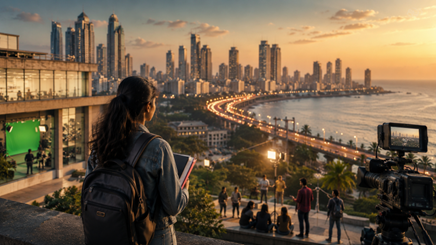
No other city in India concentrates this much media infrastructure in one place. Bollywood’s production ecosystem, OTT studios for Netflix India, Amazon Prime Video India, and Disney+ Hotstar, advertising giants like Ogilvy, McCann, and JWT – all headquartered within Mumbai. When your college is this close to where decisions are actually made, every semester feels like an industry posting, not just a study period.
Your Internships Happen at Real Companies, Not Practice Simulations
DGMC‘s Training and Placement (TAP) cell connects students directly with knowledge industry partners ,What makes Mumbai based internships different from those arranged by colleges in smaller cities is continuity. A producer at a Malad or Andheri production house can call you back the following week for the next shoot. An account manager at a western suburbs agency can have you sit on a client brief the same month. Distance, in this industry, kills momentum. Proximity keeps it alive.
Guest Lectures Aren't Zoom Calls They Walk Into Your Classroom
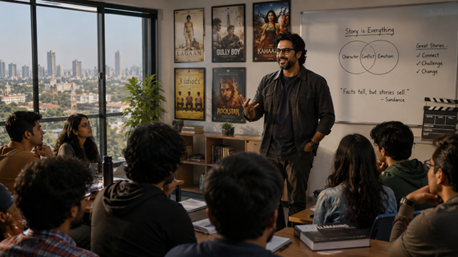
At many colleges outside Mumbai, industry guest lectures mean a professional dialling in from a studio green room, their voice cutting out every few minutes. At DGMC, practitioners from news channels, OTT platforms, PR agencies, and production houses can physically walk in because they work nearby. The college’s Perspectives by DGMC podcast series featuring working media professionals is built on exactly this kind of access. When a documentary editor or a brand strategist speaks to you in person, you can ask follow-up questions, exchange contacts, and sometimes walk away with an internship lead. That does not happen over a Zoom link.
NAAC B+ Accreditation Means Your Degree Is Trusted by Employers
India has hundreds of “media institutes” that offer certificates and diplomas with impressive names. What many do not have is UGC recognition or a quality audit. DGMC holds a NAAC B+ accreditation and is affiliated to the University of Mumbai which means your degree carries weight in a job interview, in a postgraduate application, and on a government form. As an autonomous college, DGMC also designs its own curriculum, meaning the syllabus is updated to reflect what the industry actually needs, not what a regulatory board decided a decade ago. Accreditation is not a formality it is the difference between a qualification and a credential.
You Study Across 8 Programmes Under One Roof Collaboration Is Built In
DGMC runs eight programmes: BAMMC, BAFTNMP, BMS, BSc Data Science, BSc Animation & VFX, MACJ, MA MFTM, and MA PR. That range is deliberate. In a modern newsroom, a journalist works alongside a data analyst and a video editor. In an agency, a copywriter collaborates with a social media strategist and a motion designer. When your college has all these disciplines under one roof, live project collaborations across courses are a natural part of campus life. You learn to work in the kind of cross functional teams that every employer now expects.
Festivals and Live Events Build Your Portfolio Before You Graduate
Cinevoyage, DGMC‘s flagship student film festival, is not just a celebration. it is a production exercise. Students write, shoot, edit, and screen original work in front of a real audience. The annual Media I.C.E. Age festival, the Rotaract Club, and the student magazine create similar pressure: real deadlines, real output, real feedback. By the time you attend your final placement interview, your portfolio already contains films, campaigns, and articles that you made under conditions that mirror the industry. Employers do not want to read about what you can do they want to see it.
Festivals and Live Events Build Your Portfolio Before You Graduate
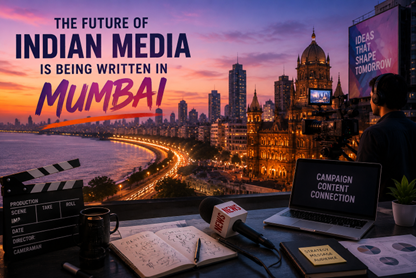
India’s OTT market is the content commissioning, talent hiring, and production decisions for most of that content happen in Mumbai. New formats short-form video, interactive documentaries, branded podcasts, AI-assisted journalism are being figured out right now, in studios and agency war rooms across the western suburbs. DGMC students are not reading about these shifts in a textbook a year after they happen. They are in the same city where the decisions are being made, with access to the practitioners making them. That kind of proximity does not just make you better informed it makes you the kind of graduate who can walk into a 2026 media job and contribute from the first week.
A degree from the right city, at the right college, does not just open doors it puts you in the building before most people have even found the address.
Studying media at an accredited college in Mumbai is not just about the courses on paper. It is about the city that surrounds those courses the studios, the agencies, the newsrooms, the festivals, the conversations that happen after guest lectures. Every one of these things compounds over three years into something a two year diploma in a smaller city simply cannot replicate.
If you are serious about a career in media, the only question left is: when do you start?